
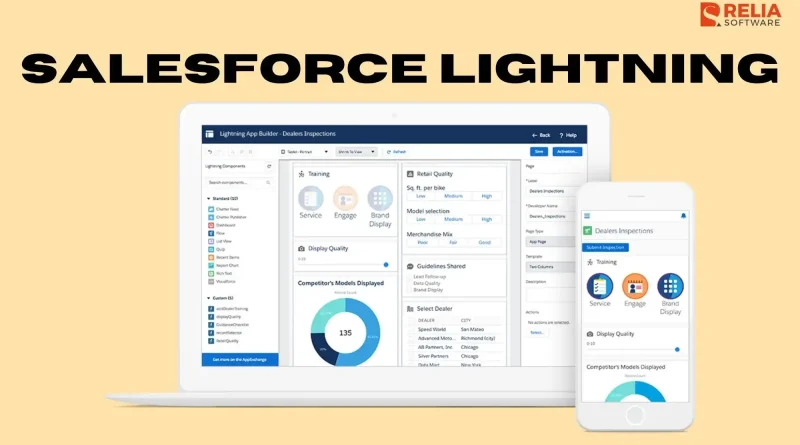
Leveraging No-Code and Low-Code Tools for Rapid MVP Development and Validation
Let’s be honest. The old way of building a software product was… slow. You’d spend months, maybe a year, writing thousands of lines of code before a real user ever saw it. By then, the market might have shifted, or worse—you’d discover nobody actually wanted it.
That’s a tough pill to swallow. But here’s the deal: a new paradigm has completely changed the game. No-code and low-code platforms are not just a fad; they’re the ultimate toolkit for founders, product managers, and innovators who need to move fast. They let you build, test, and validate a Minimum Viable Product (MVP) at a pace that would make traditional developers dizzy.
Why Speed to Validation is Everything
Think of your idea as a hypothesis. “If I build X, users will do Y.” Your MVP is the experiment to test that. The longer your experiment takes to set up, the more expensive a failure becomes. It’s like spending years building a full-scale ship to test if a hull design floats, when you could just carve a model.
No-code and low-code tools are that model-making kit. They drastically cut down the “time to first feedback.” Instead of a 6-month development cycle, you’re looking at weeks. Sometimes days. This speed lets you embrace the core startup principle: build, measure, learn. And you can do it on a budget that doesn’t require venture capital just to get started.
No-Code vs. Low-Code: Picking Your Toolbox
Okay, so what’s the difference, really? It’s a spectrum, not a hard line.
No-code platforms are all about visual development. You drag, drop, and connect pre-built components—like digital Lego. Tools like Bubble, Adalo, or Softr. You don’t write a single line of code. It’s perfect for building functional prototypes, internal tools, or even full market-ready apps for specific use cases.
Low-code platforms, think Retool, OutSystems, or Mendix, offer similar visual ease but allow—and often expect—you to drop in custom code for complex logic or integrations. It’s like having an automatic transmission with a manual override. Great for when you have a developer on the team to handle the tricky bits.
| Tool Type | Best For | Key Strength |
| No-Code | Non-technical founders, rapid prototyping, simple workflows | Unmatched speed & accessibility |
| Low-Code | Teams with some tech resources, complex business logic, scaling MVPs | Flexibility & deeper customization |
The Real Workflow: From Idea to Insight
So how does this actually play out? Let’s walk through it.
1. Mapping the Core User Journey (On Paper!)
Before you touch a tool, sketch the one, single path your user must take. Is it signing up and posting a task? Is it uploading a file and getting a report? Strip everything else away. This focus is your blueprint.
2. Choosing Your Platform
Match the tool to the job. Need a marketplace? Maybe Sharetribe or Bubble. A mobile app? Adalo or Glide. An internal dashboard? Retool or Softr. Don’t overthink it—pick one and start. The goal is learning, not perfection.
3. Building the “Viable” Part
This is where the magic happens. You’re not building every feature. You’re building just enough to trigger a user action and get feedback. Use pre-built templates. Connect to Airtable or Google Sheets as a “database.” Leverage Zapier (or now, Make) for automations. It might feel like a duct-tape solution—and that’s exactly right. It’s supposed to.
4. Launching to a Micro-Audience
Don’t announce on Product Hunt. Share it with 10 people. Twenty. People you trust to give harsh truth. Watch them use it. Where do they hesitate? What do they ask? This qualitative feedback is pure gold—more valuable than any vanity metric at this stage.
The Tangible Benefits (Beyond Just Speed)
Sure, speed is obvious. But the ripple effects are profound.
- Democratization of Creation: The person with the domain expertise—the marketer, the ops manager, the founder—can now build the solution. They understand the pain point intimately.
- Resource Reallocation: Your expensive dev talent isn’t bogged down with prototyping. They can focus on deep, complex problems later, if and when the idea is validated.
- Reduced Risk & Attachment: Honestly, it’s psychologically easier to kill a project you built in two weeks without writing a million lines of custom code. You’re less wedded to the solution, more focused on the problem.
Facing the Limitations Head-On
It’s not all sunshine, of course. You’ll hit ceilings. Performance can lag at massive scale. Your design might feel “cookie-cutter.” Complex, unique algorithms? Tough. Vendor lock-in is a real concern.
But here’s the crucial perspective: these limitations are often irrelevant for MVP validation. If your no-code MVP gains explosive traction and you hit a scaling wall—that’s a fantastic problem to have! It means you’ve validated demand and can now justify (and fund) a custom build. Most ideas never get that far.
Making the Mindset Shift
The biggest barrier isn’t technical; it’s psychological. You have to move from “building for the future” to “building for the next learning.” It requires embracing imperfection. Your MVP will be janky. It will have workarounds. That’s not a bug; it’s the feature.
Think of it as a conversation starter with your market, not a final monologue. You’re handing them a rough sketch and asking, “Is this what you see?”
The landscape of creation has fundamentally shifted. The leverage is no longer just in writing code, but in stitching together powerful components with strategic intent. It asks a new question: not “Can we build it?” but “Should we build it?”—and provides the fastest, cheapest way to find an answer.